


What Are MIL Connector Standards?
Are your connections failing under pressure? That’s simply not an option for mission-critical systems. So, what makes certain connectors tough enough for the most demanding jobs? Military specifications are the core difference, setting the benchmark for reliability where performance is non-negotiable. We help you make sense of these crucial standards.
The Purpose Behind MIL Specifications
Imagine equipment operating in the harshest conditions possible. Think scorching deserts, freezing altitudes, or the intense vibrations of a rocket launch. Standard commercial parts often buckle under such extremes. That’s precisely why military specifications, or mil-spec ethernet connector, exist. They arose from a critical need, not arbitrary rules.
One major driver was interoperability. Defense and aerospace systems rely on components from numerous suppliers. These parts must work together seamlessly. MIL-specs define the exact dimensions, materials, performance criteria, and testing procedures. This common technical language guarantees that a connector built today will mate perfectly with one made years ago, or by a completely different manufacturer adhering to the same standard. It simplifies logistics and ensures field replaceability. No guesswork allowed.
Then there's reliability under duress. These components face conditions far beyond typical use cases:
● Extreme temperature ranges
● Shock and vibration
● Corrosive atmospheres (like salt spray)
● High humidity or fluid exposure
● Electromagnetic interference (EMI)
Failure in these scenarios isn't just costly; it can jeopardize missions and lives. MIL-specs mandate rigorous testing protocols that push components to their limits, confirming they can survive and function reliably no matter what.
So, the core purposes boil down to delivering:
● Standardization: Consistent form, fit, and function across suppliers.
● Guaranteed Reliability: Proven performance through demanding tests.
● Extreme Durability: Built tough for challenging environments.
● Interchangeability: Easier maintenance, repair, and supply chain management.
Adhering to these strict guidelines requires a deep commitment from manufacturers. It's about rigorous quality control and building components engineered for absolute dependability when it matters most.
Key MIL-Spec Connector Types You'll Encounter
Mil standard connectors demand toughness and compatibility. But what specific connectors embody these principles? While the list of MIL specifications is extensive, covering countless component types, you'll frequently encounter a few key connector families. These are the workhorses found in military hardware, aerospace systems, and demanding industrial applications.
Let's look at some prominent examples:
MIL-DTL-38999 (D38999)
Often considered the go-to for high-performance, harsh-environment circular connectors. You find these everywhere – from aircraft and missiles to ground vehicles and advanced communications gear.
● Highlights: Known for high contact density, superior EMI shielding, and environmental sealing.
● Variations: Comes in different series (Series I, II, III, IV) offering distinct features like coupling mechanisms (bayonet, threaded, breech-lock) and 'scoop-proof' designs that protect pins during mating. Understanding the nuances between series is critical for selection.
MIL-DTL-26482
Another very common circular connector family, valued for its reliability and quick-disconnect bayonet coupling. Widely used in military communications, aerospace applications, and industrial equipment.
● Highlights: Offers good environmental sealing and durability in a relatively compact size.
● Variations: Available in Series 1 (solder contacts) and the generally preferred Series 2 (rear-release crimp contacts), offering easier assembly and repair.
MIL-DTL-5015
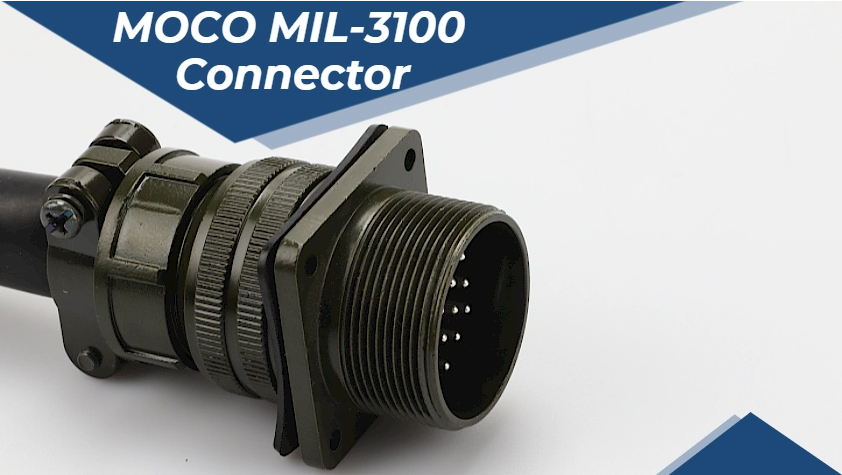
This is one of the older but still widely used mil spec connectors types, especially favored for power applications and ground equipment. These are often larger, very robust circular connectors.
● Highlights: Threaded coupling ensures secure mating. Built to handle higher currents and voltages compared to some smaller types. You’ll see them on military vehicles, industrial machinery, and shipboard systems.
● Legacy: A true classic known for its ruggedness in heavy-duty scenarios.
MIL-DTL-24308 (M24308 / D-Sub)
Recognize the shape? These are the ruggedized, military-grade versions of the familiar rectangular D-subminiature connectors. They bring MIL-spec reliability to data, signal, and power connections in panels, enclosures, and avionics boxes.
● Highlights: Offers standard contact densities (from 9 to 50+ pins) in a compact rectangular form factor. Options include filtered versions for EMI suppression and non-magnetic variants.
● Difference: Significantly more durable and environmentally resistant than their commercial counterparts.
How These Specs Ensure Reliability
We know MIL standards exist for reliability and compatibility, and we've seen some common connector types. But how exactly do these specifications guarantee the rock-solid performance demanded in critical applications? It's not by chance. It's a multi-layered approach built on strict controls over materials, design, and relentless testing. This rigorous process is a key difference from standard commercial-grade parts.
1. Strict Material Controls
It all starts with the raw materials. MIL standards don't offer suggestions; they mandate the specific types of metals, platings, plastics, and elastomers that can be used.
● Think high-strength, lightweight aluminum alloys or corrosion-busting stainless steel for shells.
● Specific plating materials like olive drab cadmium (though alternatives like zinc-nickel are growing) protect against corrosion.
● Inserts use high-quality dielectric materials that maintain electrical integrity under stress.
● Seals and grommets employ elastomers chosen for resilience against fluids and temperature extremes. There's no room for substituting cheaper, unproven materials when building to a MIL-spec.
2. Prescribed Design Features
The physical design isn't left open to interpretation. Specifications often dictate critical design elements that enhance usability and ruggedness:
● Scoop-Proof Interfaces: A clever design feature on many circular connectors. It means pins on one connector half are recessed, preventing them from being bent or damaged if the shells are accidentally scraped together ('scooped') during mating attempts.
● Robust Coupling: Mechanisms like threads, bayonets, or breech-locks are designed to stay securely mated even under intense vibration or physical shock.
● Environmental Sealing: Specific requirements for gaskets, O-rings, and wire seals ensure protection against moisture, dust, dirt, and operational fluids, often meeting defined IP ratings.
● Strain Relief: Provisions for securely attaching backshells or cable clamps protect the wire terminations from stress.
3. Brutal Qualification Testing
This is where the components prove their mettle. Before a manufacturer's product line can be officially recognized as meeting a MIL standard, samples must survive a gauntlet of standardized qualification tests. These aren't gentle checks; they simulate worst-case operational and environmental conditions:
● Temperature Cycling: Rapid shifts between extreme hot and cold.
● Shock & Vibration: Mimicking everything from bumpy transport to operational jolts.
● Salt Spray/Fog: Assessing corrosion resistance for marine or coastal deployments.
● Humidity Exposure: Ensuring performance in damp environments.
● Altitude Immersion: Checking sealing under pressure changes.
● Mating Durability: Cycling connectors hundreds or even thousands of times.
● Electrical Integrity: Testing insulation resistance, contact resistance, and voltage tolerance under various stresses.
4. The QPL/QPD System
Proof of compliance isn't just a claim. Manufacturers must submit their products for this rigorous qualification testing. Parts that successfully pass are added to the Qualified Products List (QPL) or the more modern Qualified Products Database (QPD), maintained by the US Defense Logistics Agency (DLA). Specifying and using QPL/QPD listed components gives you verified assurance that the connector truly meets all the performance and quality requirements of the standard. It's a vital quality gatekeeper.
This system – controlled materials, mandated designs, exhaustive testing, and QPL/QPD validation – builds reliability in from the start. For manufacturers serving these critical sectors, meeting and maintaining these qualifications demonstrates an unwavering commitment to delivering components that perform flawlessly when everything depends on it.
Where You'll Find Them Used
We've established that mil spec connectors are built tough and rigorously tested for reliability. So, where is this level of performance essential? The simple answer is: anywhere that a connection failure carries significant consequences. While the "MIL" in the name points to their origin, their application reaches far beyond just military hardware today.
Military & Defense: The Foundation
Naturally, the core users remain military and defense forces globally. The need for dependable connections under extreme duress is paramount here. You'll find MIL-spec connectors in:
● Tactical Communications: Radios, field computers, antennas, headsets requiring secure links.
● Ground Vehicles: Tanks, Humvees, support trucks – all packed with electronics exposed to shock and dirt.
● Avionics: Fighter jets, helicopters, and transport aircraft rely on them for flight controls, sensors, and weapons systems.
● Naval Systems: Shipboard communication, sonar, radar, and weapons systems facing corrosive salt environments.
● Soldier Systems: Modern wearable tech, power packs, GPS units, and targeting devices.
Aerospace: Reaching New Heights
The aerospace industry, both commercial and defense, shares similar needs for high reliability in challenging conditions. Weight, vibration, and extreme temperatures are major factors. Applications include:
● Flight Control Systems: Critical systems where signal loss is unthinkable.
● Navigation & Communication: GPS receivers, satellite links, cockpit instruments.
● Engine Management: Sensors and controls operating in high-heat, high-vibration zones.
● Space Applications: Satellites, launch vehicles, and ground support equipment face unique environmental stresses.
Rugged Industrial Fields: Beyond M&A
The robustness designed for military use translates perfectly to demanding industrial applications. When standard connectors won't survive the environment or the cost of downtime is too high, MIL-spec often becomes the solution:
● Oil & Gas: Downhole exploration tools, offshore rigs, and seismic surveying equipment are exposed to pressure, chemicals, and rough handling.
● Heavy Equipment: Construction machinery, mining vehicles, agricultural equipment constantly dealing with vibration, dust, and moisture.
● Transportation: Railway signaling systems, marine vessels, and performance racing, where reliability under stress is key.
● Factory Automation: Certain high-vibration or harsh-environment robotic and manufacturing lines.
Emerging & Specialized Areas
You might also encounter MIL-spec connectors in specialized medical diagnostic equipment designed for field use or harsh conditions, and in certain types of scientific research apparatus where data integrity and operational consistency are critical.
The unifying theme across all these areas is the unacceptable cost of failure. Whether it's mission success, safety, or expensive operational downtime, these applications demand connectors proven to work, every single time, despite the conditions. Understanding these diverse and challenging environments is key for manufacturers dedicated to producing components that meet real-world operational demands.
Wrapping Up: The MIL-Spec Advantage
MIL connector standards are far more than just numbers on a datasheet. They represent a codified system for ensuring reliability, interoperability, and survival in environments where failure carries a high cost. They are the foundation for dependable connections across critical industries.
We've walked through:
● Why these specs were created – tackling interoperability and harsh conditions head-on.
● What some common types look like – from the versatile D38999 to rugged D-subs.
● How they guarantee performance through controlled materials, specific designs, and rigorous testing (QPL/QPD validated).
● Where they're deployed – spanning military, aerospace, heavy industry, and beyond.
Ultimately, choosing components built to these military specifications means opting for proven performance and peace of mind. It’s about reducing risk and trusting that your connections will hold up when it matters most. Less guesswork, more certainty.
Facing a project that demands this level of connector integrity? Understanding these standards is your first step. If you're looking for reliable interconnect solutions built with an unwavering commitment to quality for critical applications, see what we offer at Moco Connectors.
Visit our website to explore our capabilities: https://www.mococonnectors.com/

Shenzhen MOCO Interconnect Co., Ltd.
Become a world-class industrial connector supplier & manufacturer in China, MOCO Connectors providing reliable and convenient connector solutions for global customers
PRODUCTS
QUICK LINKS
If you have any question, please contact MOCO connectors.
TEL: +86 -134 1096 6347
WhatsApp: 86-13686431391
EMAIL: eric@mocosz.com
2/F 1st Block,XinHao Industrial Park,N.O 21 XinWei Rd,XinZhuang Community,MaTian, GuangMing District,Shenzhen,P.R.C