


A Guide to the Different Types of Coaxial Cables
The wrong coaxial cable can tank your signal quality, cost you thousands in equipment damage, and turn a straightforward installation into a troubleshooting nightmare. You're staring at spec sheets filled with RG ratings, impedance numbers, and shielding configurations that all blur together.
We've seen procurement teams order cables based on price alone, only to discover they picked up the wrong type for their frequency requirements. Engineers inherit systems with mystery cables that nobody documented. Technicians pull apart assemblies trying to figure out which connector matches which cable standard.
Here's what we'll cover:
● What makes a coaxial cable different from other transmission lines
● RG-series cables and their specific applications
● Hardline coaxial cables for high-power transmission
● Radiating cables for tunnel and underground installations
● Semi-rigid and flexible options for different mounting scenarios
You'll walk away knowing exactly which cable type fits your application specs, frequency range, and environmental conditions. No more guessing games with your signal integrity.
Coaxial Cable Explained Through Structure and Function
A coaxial cable transmits electrical signals through a specific geometric arrangement that keeps electromagnetic interference out while keeping your signal in. The name "coaxial" comes from the cable's construction, where two conductors share the same axis.
Here's how the layers stack up from inside to outside:
● Center Conductor: This solid or stranded wire carries your actual signal. Copper works for most applications, while copper-clad steel or silver-plated copper handles specialized requirements.
● Dielectric Insulator: This layer separates your center conductor from the outer shield. The material you choose here (polyethylene, foam, or PTFE) directly affects signal speed and loss rates.
● Outer Conductor (Shield): Braided copper, foil, or both wrap around the dielectric. This shield blocks external interference and provides a return path for your signal. Multiple shields offer better protection but reduce flexibility.
● Jacket: The outer protective layer withstands physical damage, UV exposure, and environmental conditions. PVC handles indoor installations, while PE or specialized compounds protect outdoor and harsh-environment cables.
The key advantage over standard twisted-pair cables comes from that outer shield. You get consistent impedance across the entire length, which means your signal maintains its integrity at higher frequencies. This shielded design lets coaxial cables carry broadband signals, video feeds, and RF transmissions without picking up noise from nearby electrical equipment or radio sources.
Breaking Down Coaxial Cable Categories
Coaxial cables are split into distinct categories based on their construction, flexibility, and intended application. Each type solves specific transmission challenges across different frequency ranges and environmental conditions.
● RG-Series Coaxial Cables: The Radio Guide classification system remains the most common way to identify coaxial cables in the field. These cables carry standardized specifications that tell you exactly what performance to expect.
○ RG-6 handles residential and commercial video distribution. You'll find this cable running from cable modems, satellite dishes, and CATV systems. Its 75-ohm impedance and solid dielectric make it the go-to choice for frequencies up to 3 GHz.
○ RG-11 steps up the performance with a thicker core and lower signal loss over long distances. Use this when you need to push signals beyond 150 feet without amplification.
○ RG-59 works for shorter analog video runs and CCTV installations. Its thinner diameter makes routing easier in tight spaces, but signal loss increases faster than RG-6.
○ RG-58 and RG-213 serve 50-ohm applications like radio communications and test equipment. RG-58 flexes easily for mobile and temporary installations, while RG-213's thicker construction handles higher power levels.
● Hardline Coaxial Cables: Hardline cables use a solid aluminum or copper outer conductor instead of braided wire. This rigid construction delivers the lowest signal loss available, making these cables the standard for broadcast towers, cellular base stations, and long-distance RF transmission. The trade-off comes in installation complexity since you can't bend hardline around corners.
● Radiating Coaxial Cables: Sometimes called leaky coax, these cables intentionally allow the signal to escape through slots in the outer conductor. Tunnels, mines, and underground transit systems use radiating cables to maintain radio communication where standard antennas can't reach. The controlled leakage creates a continuous coverage zone along the entire cable length.
● Semi-Rigid and Flexible Options
○ Semi-rigid cables use a solid metal tube as the outer conductor. You form them once during installation, and they hold that shape permanently. Military and aerospace applications rely on semi-rigid cables where vibration resistance and consistent impedance matter more than flexibility.
○ Flexible cables let you route connections around obstacles and moving equipment. The braided or spiral outer conductor maintains shielding while allowing repeated bending. Expect some performance trade-offs compared to rigid alternatives.
● Specialized Coaxial Types
○ Triaxial cables add a second outer shield separated by another dielectric layer. This extra shielding blocks interference in high-noise environments like broadcast studios and medical imaging equipment.
○ Twin-axial cables bundle two coaxial cables in a single jacket. You get balanced signal transmission for applications requiring differential signaling or redundant paths.
○ Conformable cables bridge the gap between semi-rigid and flexible designs. You can form them by hand for custom routing, and they maintain that shape without the permanent commitment of true semi-rigid construction.
○ Armored coaxial cables wrap the standard construction in metal or synthetic armor. This protection matters when cables face physical abuse, rodent damage, or direct burial conditions.
Cable Type | Impedance | Primary Use | Flexibility | Loss Rate |
RG-6 | 75Ω | Broadband/TV | Moderate | Moderate |
RG-11 | 75Ω | Long runs | Low | Low |
RG-58 | 50Ω | RF/Radio | High | Moderate |
Hardline | 50Ω/75Ω | Broadcast | None | Very Low |
Semi-Rigid | 50Ω | Aerospace/Military | None | Very Low |
Radiating | 50Ω | Tunnels | Low | Variable |
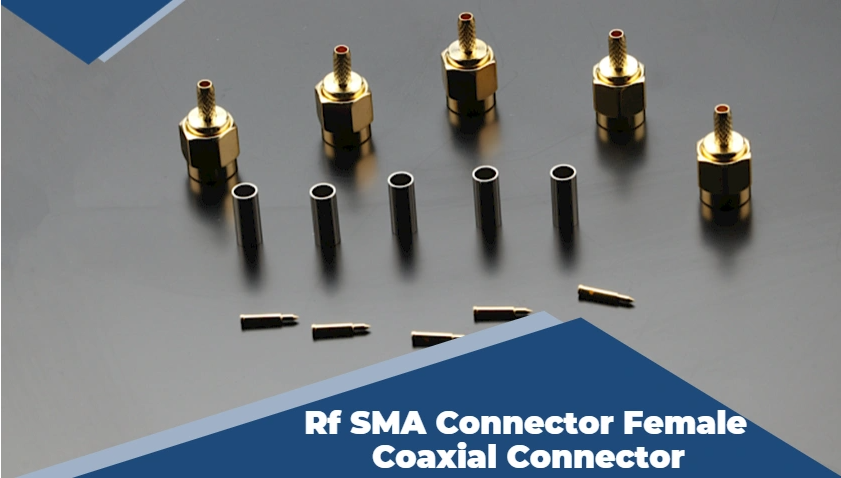
Your connector choice needs to match your cable type. An RF coaxial cable demands a different termination than a standard RG-6 run.
FAQs
Can I use RG-6 cable for all my 75-ohm applications?
RG-6 handles most residential and light commercial installations up to 150 feet without issue. Beyond that distance, you'll see signal degradation that affects picture quality or data transmission. Switch to RG-11 for longer runs or when you need to maintain signal strength across multiple splits. The thicker core in RG-11 cuts your loss rate nearly in half compared to RG-6.
What determines whether I need 50-ohm or 75-ohm cable?
Your equipment dictates impedance requirements. Television connectors, cable modems, and video distribution systems operate at 75 ohms. Radio communications, test equipment, and cellular systems run at 50 ohms. Mixing impedance values creates signal reflections that corrupt your transmission. Match your cable impedance to your source and destination devices.
When does hardline coaxial justify its installation complexity?
Hardline makes sense when signal loss must stay below 1 dB per 100 feet at your operating frequency. Broadcast towers, cellular base stations, and long outdoor runs benefit from hardline's superior performance. The rigid construction resists weather damage and maintains consistent impedance over decades. You'll need specialized tools and connectors, but the reduced amplification requirements typically offset the higher installation costs.
Which connector types work with different coaxial cables?
BNC connectors attach to RG-58, RG-59, and similar flexible cables for quick-connect applications. RCA connectors handle consumer audio and video on RG-59. DIN connectors serve specialized applications requiring multiple contacts. F-type connectors crimp or thread onto RG-6 and RG-11 for television and broadband installations. Your cable diameter and application frequency determine which connector style provides reliable termination.
Matching Your Cable Choice to Connector Requirements
You can now walk into a cable spec conversation knowing exactly which type fits your frequency range, distance requirements, and installation environment. No more second-guessing whether RG-6 will handle the job or if you need to step up to hardline.
Here's what this knowledge unlocks for you:
● Eliminate costly reorders by selecting cables that match your impedance requirements and connector types from the start, saving both project time and budget overruns.
● Prevent signal degradation issues before installation by calculating your run length against cable loss rates, ensuring your system performs at spec on day one.
● Reduce installation headaches by choosing flexibility levels that match your routing constraints, cutting installation time while maintaining shielding integrity throughout bends.
● Avoid connector mismatches by understanding which cable constructions accept which termination styles, preventing field failures from incompatible coaxial cable connector assemblies.
MOCO Connectors manufactures cables and connector assemblies for applications where off-the-shelf solutions fall short. Our engineering team works with medical connectors for imaging equipment, military connector systems for defense applications, and auto connectors for vehicle communication networks. We spec out cable types based on your operating frequency, power requirements, and environmental conditions.
You get assemblies that arrive tested and ready to install, with the right cable married to the right connector for your application. Check out the custom cable solutions we've built for aerospace connector systems, new energy connectors in battery management, and automation connectors across industrial control environments.

Shenzhen MOCO Interconnect Co., Ltd.
Become a world-class industrial connector supplier & manufacturer in China, MOCO Connectors providing reliable and convenient connector solutions for global customers
PRODUCTS
QUICK LINKS
If you have any question, please contact MOCO connectors.
TEL: +86 -134 1096 6347
WhatsApp: 86-13686431391
EMAIL: eric@mocosz.com
2/F 1st Block,XinHao Industrial Park,N.O 21 XinWei Rd,XinZhuang Community,MaTian, GuangMing District,Shenzhen,P.R.C