


What Is An M12 Connector? Types, Uses, And Benefits
Tired of intermittent signals or connection failures slowing you down? Sometimes the smallest components cause the biggest headaches, especially if you're using the wrong type of M12 connector without realizing it. Getting this detail right avoids frustrating troubleshooting later. We built this guide to make M12 connectors clear and simple.
What Is An M12 Connector?
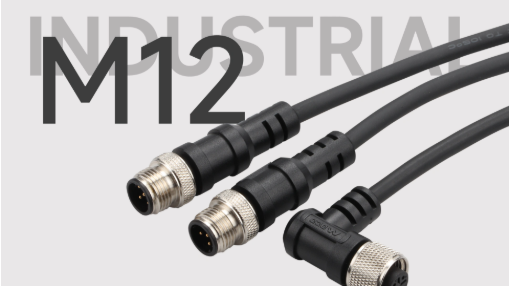
Let's get down to basics. An M12 connector is a type of circular electrical connector widely used in industrial automation and control systems. Think sensors, actuators, industrial Ethernet, and fieldbus networks – M12s are often the go-to choice. They provide secure and reliable links for data and power transmission in these demanding settings.
But where does the name "M12" come from? It's pretty simple, really. It refers to the Metric 12mm diameter locking thread used to couple the plug and receptacle parts. This standardized thread provides compatibility between components and creates a tight, secure connection when mated.
This screw-locking mechanism is a big deal. It prevents accidental disconnection resulting from vibration or moderate pulling, common issues on factory floors or with moving equipment. You get a connection you can depend on, reducing potential downtime.
Toughness is another key trait of M12 connectors, like the ones we provide at Moco Connectors. They typically feature environmental sealing, often rated to IP67 or higher. This signifies resistance to dust ingress and protection against temporary water immersion, making them perfectly suited for harsh industrial conditions.
In short, the core features include:
● Circular Design: Compact and easy to handle in tight spaces.
● M12 Locking Thread: Gives you that secure, vibration-resistant coupling.
● Environmental Sealing: Rated for dust and water protection (look for IP67, IP68 ratings).
● Versatile Use: Capable of carrying sensor signals, network data (like Ethernet), and operating power.
Decoding M12 Connector Types
Not all M12 connectors are created equal. You'll notice they come with different "codings" or "keyings" and various pin counts. This isn't just for variety; it's crucial for safety and performance. The coding is a physical feature – a specific shape or notch – that prevents you from accidentally plugging a connector into the wrong type of socket. Imagine connecting a power cable where a data cable should go – not good.
Think of coding like the unique shape of a key fitting only its specific lock. It ensures you make the correct electrical connection every time. Here are some of the most common codings you'll encounter:
● A-Coding: This is the workhorse for sensors, actuators, DC power, and basic industrial networks like DeviceNet or CANopen. You'll find A-coded connectors with pin counts ranging from 2 to 17 pins. They are very versatile for general-purpose automation.
● B-Coding: Primarily used for PROFIBUS fieldbus connections. B-coding prevents accidental mixing with A-coded sensor cables. Typically found with 5 pins.
● D-Coding: Your go-to for industrial Ethernet and PROFINET systems. D-coded connectors usually have 4 pins (2 pairs) and support data speeds up to 100 Mbps (Fast Ethernet). The specific keying keeps them separate from power or other network types.
● X-Coding: Need faster Ethernet speeds? X-coding is the answer. Designed for high-speed industrial Ethernet up to 10 Gbps, these connectors have 8 pins (4 pairs) and feature internal shielding between the pairs to maintain signal integrity at higher frequencies. Essential for modern, data-intensive applications.
Why So Many Pin Counts?
The number of pins corresponds directly to the signals or power lines the connector needs to carry.
● A simple sensor might only need 3 or 4 pins (power, ground, signal).
● More complex devices or power applications might require 5, 8, or even 12 pins.
● High-speed data like Gigabit Ethernet (X-coding) requires 8 pins.
Choosing the right coding and pin count is fundamental. Using a D-coded M12 for a sensor expecting A-coding just won't work – they physically won't mate. Always match the connector coding and pin count to your specific application and the device requirements. At Moco Connectors, we offer a range of these standard codings to fit your needs.
Common Uses For M12 Connectors
Where do M12 connectors show up? Their blend of toughness, secure locking, and sealing makes them ideal for many industrial spots. You'll find them everywhere once you start looking.
Here are some prime examples:
● Sensors and Actuators: This is a classic application. Proximity sensors, photoelectric sensors, pressure sensors, temperature sensors, and valve actuators often rely on A-coded M12s for reliable signal and power transmission, even with constant vibration or potential exposure to fluids.
● Industrial Networking: For connecting machines and controllers, M12s are indispensable.
○ Fieldbus: B-coded M12s are standard for PROFIBUS DP networks, linking distributed I/O modules. A-coding is also used for other fieldbuses like CANopen and DeviceNet.
○ Industrial Ethernet: D-coded (up to 100 Mbps) and X-coded (up to 10 Gbps) M12s provide robust connections for Ethernet/IP, PROFINET, EtherCAT, and other Ethernet-based protocols in factory settings. They beat standard RJ45 connectors hands down for durability.
● Factory Automation & Robotics: Think assembly lines, packaging machinery, and robotic arms. M12 connectors handle the constant movement and demanding conditions, ensuring signals for control and feedback remain stable.
● Food and Beverage Processing: Washdown environments are common here. The high IP ratings (like IP67, IP68, even IP69K for high-pressure washdowns) of stainless steel M12 connectors make them perfect for equipment that needs frequent cleaning.
● Transportation: You might find M12s in trains, buses, or heavy-duty vehicles for various onboard systems, thanks to their resistance to shock and vibration.
● Measurement and Control: Anywhere precise measurements and reliable control signals are needed in less-than-ideal conditions, M12 connectors provide a secure link.
Key Advantages: Why Choose M12 Connectors?
We've seen what M12 connectors are and where they're used. But why are they so popular in demanding applications? It boils down to several key advantages that directly address common industrial challenges.
● Outstanding Durability and Sealing: Let's face it, industrial environments aren't gentle. M12 connectors are built tough. Their typical construction resists vibration, shock, and general physical stress. Add high IP ratings (like IP67 or IP68), and you get excellent protection against dust and liquids. This means fewer failures caused by environmental factors.
● Secure, Reliable Connection: The M12 screw-locking thread is a major plus. It ensures the connector stays firmly mated, preventing accidental disconnects that can halt production or lead to faulty data. This secure coupling is critical where movement or vibration is constant. You get peace of mind.
● Compact Footprint: Space is often tight inside machinery or control panels. The M12's circular design offers a relatively small form factor compared to bulkier rectangular connectors, making installation easier in confined areas.
● Standardization and Safety: The defined codings (A, B, D, X) are a huge benefit. They prevent incorrect mating, protecting your equipment from potential electrical damage. This standardization also promotes interoperability between components from different m12 connector manufacturers (as long as they adhere to the standard).
● Versatility for Various Signals: M12 isn't just for one thing. With different codings and pin counts, you can use them for sensor signals, actuator power, fieldbus communications, and high-speed Ethernet data transmission – all within the same connector family. Some types, particularly D-coded and X-coded for Ethernet, also offer shielding options to protect signal integrity from electromagnetic interference (EMI).
Selection Guidance: Picking The Right M12 Connector
Knowing the m12 connector types and benefits is great, but how do you pick the correct M12 connector? Making the right choice prevents connection problems and ensures your system runs smoothly. It's about matching the connector to the job.
Here’s a practical breakdown of what to consider:
1. Application & Coding: What are you connecting?
○ Sensors/Actuators/DC Power: A-coding is usually your best bet.
○ PROFIBUS: Stick with B-coding.
○ Industrial Ethernet (up to 100 Mbps): D-coding is the standard.
○ High-Speed Ethernet (up to 10 Gbps): You'll need X-coding for the performance and shielding.
○ Pro Tip: Never force a connection. If it doesn't mate easily, double-check the coding – using the wrong one is a common mistake.
2. Pin Count: How many conductors does your signal or power require? Count the wires needed for your device (power, ground, signal lines, data pairs). Choose an M12 connector with at least that number of pins. Common options range from 3 to 17 pins, depending on the coding.
3. Environmental Conditions: Where will the connector live?
○ Dusty or Damp Areas: Look for an IP67 rating minimum. This protects against dust and temporary water immersion.
○ Wet/Washdown Environments: IP68 or even IP69K (for high-pressure, high-temperature washdowns) might be necessary. Consider stainless steel connector bodies for corrosive environments like food processing.
○ Vibration/Movement: The inherent screw-locking mechanism of M12 is good, but ensure your cable strain relief is also adequate.
4. Cable Type and Length: What kind of cable are you using? Is it shielded (required for many Ethernet applications)? Ensure the connector is compatible with your cable diameter and type (e.g., PVC, PUR). Moco Connectors offers both field-attachable connectors (where you wire it yourself) and pre-molded cable assemblies for convenience and guaranteed sealing.
5. Termination Style:
○ Molded Cable Assemblies: These come with the connector factory-molded onto a specific length of cable. They offer the best sealing and durability, great for reliability.
○ Field-Attachable Connectors: These allow you to terminate your own cable in the field using screw terminals, insulation displacement connection (IDC), or solder cups. They offer flexibility for custom lengths or repairs. Choose the termination style that suits your installation needs and skill level.
Wrapping Up: M12 Connectors For Reliable Connections
M12 connectors offer a robust and standardized solution for many industrial connectivity needs. From their basic definition and secure locking mechanism to the specific codings (A, B, D, X) designed for different applications like sensors, fieldbus, and Ethernet, they provide versatility.
We've seen how they excel in tough environments – resisting dust, water, and vibration – making them ideal for factory automation, robotics, and even food processing. Choosing the right type involves matching the coding, pin count, and environmental rating to your specific requirements.
Getting the connection right means less downtime and more dependable operation. Whether you need pre-molded cable assemblies for guaranteed sealing or field-attachable options for flexibility, M12 connectors deliver.
Ready to find the right M12 solution for your project? Explore the options available at Moco Connectors: https://www.mococonnectors.com

Shenzhen MOCO Interconnect Co., Ltd.
Become a world-class industrial connector supplier & manufacturer in China, MOCO Connectors providing reliable and convenient connector solutions for global customers
PRODUCTS
QUICK LINKS
If you have any question, please contact MOCO connectors.
TEL: +86 -134 1096 6347
WhatsApp: 86-13686431391
EMAIL: eric@mocosz.com
2/F 1st Block,XinHao Industrial Park,N.O 21 XinWei Rd,XinZhuang Community,MaTian, GuangMing District,Shenzhen,P.R.C