


What is a medical connector?1
We rely on medical devices to work flawlessly, but what if a simple connection fails? A bad connection can mean the difference between accurate data and a critical error. This is why medical connectors are so important—they are the silent heroes of healthcare technology. They literally hold the system together. We’ll show you why these small components are a really big deal.
What Makes A Connector Medical?
A medical connector is not just a standard plug with a different shape. The core difference lies in the extreme demands they face. A hospital setting is a tough place for any piece of equipment, and every component must perform perfectly, every time. A single point of failure can have serious consequences for a patient.
These aren't components you can just buy off the shelf. They are purpose-built to handle everything from intense cleaning agents to constant use in critical situations. You need a connector that is specifically engineered for this world of high-stakes performance.
● Safety Above All: Medical connectors feature mechanisms that prevent accidental disconnection. Think of a device plugged into a patient. You want a secure lock, not a friction fit. They also protect against electrical shock and unwanted signal interference.
● Materials Matter: Standard plastics won't cut it. These connectors must use biocompatible materials that won't harm a patient on contact. They must also resist aggressive chemicals used for disinfection. Many use specialized plastics like polysulfone or PEEK.
● Withstanding Sterilization: Equipment gets cleaned constantly. A medical connector must survive repeated exposure to autoclave sterilization (high-pressure steam), gamma radiation, or Ethylene Oxide (EtO) gas without degrading. It’s a harsh process that would ruin a normal connector.
● Ingress Protection (IP) Ratings: These connectors need to keep liquids and dust out. A high IP rating, like IP68, is common. It proves the connector can protect internal components from spills and frequent washes, keeping the system clean and safe.
● Usability in a Pinch: A nurse or doctor may need to disconnect something in a hurry, perhaps with only one hand. Many medical connectors have push-pull, single-action designs for quick, stress-free operation.
● Data and Power Integrity: They must provide a stable, clean signal. Medical devices rely on accurate data. We’re talking about everything from ECG readings to video feeds. The connector has to maintain signal integrity while resisting EMI/RFI noise from other equipment.
Common Types Of Medical Connectors
After understanding what makes a connector "medical," it helps to know the main categories. No single connector works for every device. The right type depends entirely on the specific job it needs to do. We see many different designs on the market, each with its own benefits.
Push-Pull Connectors
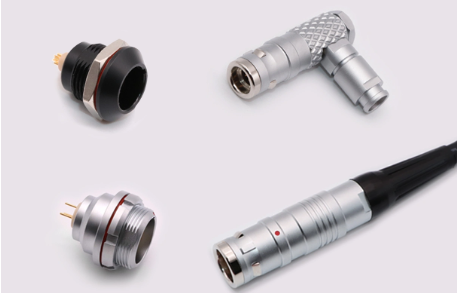
These are perhaps the most common type you will find. They have a locking mechanism that provides an incredibly secure connection. You simply push the connector in to lock it. To release, you pull on the outer sleeve. It’s a fast, one-hand operation that’s perfect for busy clinical settings where you can't afford a disconnection. They give a satisfying click when they are locked in.
● Quick Disconnect: Allows for fast, single-handed release.
● High Density: You can often fit many contacts in a small space.
● Secure Locking: Prevents accidental pull-out.
Circular Connectors
Circular connectors are an extremely versatile option. They come in many sizes and are used to transmit power, signal, or a combination of both. You will often see them on things like patient monitors, surgical instruments, and imaging equipment. Their rounded design is great for fitting into tight spaces and resisting strain.
Plastic vs. Metal Connectors
We see both plastic and metal connectors used in medicine, each for different reasons.
Plastic Connectors
Plastic shells are perfect for disposable or single-use devices, such as catheters. They are lightweight, cost-effective, and often resistant to sterilization methods like gamma radiation. Their non-conductive nature is an extra safety measure.
Metal Connectors
Metal shells offer far greater durability and shielding. They are a good choice for reusable surgical tools or imaging equipment that must withstand repeated, heavy use. We use metal to provide excellent EMI and RFI shielding, which protects sensitive signals from interference.
Medical Connector Regulations
Every component used in a medical device must follow strict regulations. These aren't just suggestions; they are rules designed to protect patients and operators. We have to follow these rules without question.
Manufacturers who make medical grade connectors must adhere to several international standards. These standards ensure every product on the market meets a baseline of safety and quality.
IEC 60601-1
This is the big one for any electrical medical device. This standard outlines general requirements for basic safety and performance. It covers everything from protecting against electrical shock to managing risks. For us, it means our connectors must have proper "creepage" and "clearance" distances to prevent arcing between contacts.
The standard also defines two key levels of protection:
● Means of Patient Protection (MOPP): This covers anything connected directly to a patient.
● Means of Operator Protection (MOOP): This protects the doctor or nurse using the device.
ISO 80369 Series
This standard exists to stop something terrible from happening. Historically, different medical tubing and connectors looked similar, which caused dangerous misconnections. This standard prevents a connector for an IV drip from fitting into a connector for an enteral feeding tube. It is a simple concept with life-saving results.
ISO 13485
While IEC 60601-1 and ISO 80369 cover the product itself, ISO 13485 covers the process. This is the international standard for quality management systems in the medical device connector industry. It ensures a company has a system in place to consistently meet customer and regulatory requirements. It is how you know a product is made with consistent quality and proper documentation from start to finish.
Where Are Medical Connectors Used?
You now know what makes a connector "medical." So, where do you actually find them? The answer is simple: everywhere. These components are a core part of the healthcare ecosystem, from the operating room to the home. The type of connector you see depends on the device's function and environment. We will look at a few common examples.
Patient Monitoring
Think about a patient monitor with multiple wires running to a person. Each wire for an ECG, a pulse oximeter, or a blood pressure cuff has a connector. These connectors must be ultra-reliable to ensure a constant, accurate signal. They are also designed to be simple to connect and disconnect quickly, giving nurses and doctors more time to focus on patient care.
Surgical Instruments
Surgical tools are a different animal entirely. Connectors on things like laparoscopic cameras or electrocautery devices must be able to withstand repeated sterilization. The connector’s materials must be a match for high-pressure steam (autoclave) or harsh chemicals. Ergonomics is also key, as the connector has to feel right in a surgeon's hand.
Diagnostic & Imaging Equipment
Medical imaging relies on data. A connector used in an ultrasound probe or an MRI machine needs to handle high-frequency signals without any interference. These are often complex, multi-pin connectors that transmit both power and high-resolution data. The connector must have excellent shielding to protect the signal from other electronics in the room.
Other Applications
The uses go beyond that, too. You can find medical electrical connectors in:
● Infusion pumps: They connect power and signal, often with a non-interconnectable design to follow ISO 80369.
● Portable devices: Wearable health trackers and home-use equipment need lightweight, durable, and sometimes waterproof connectors.
● Dental tools: Handpieces require connectors that are small, ergonomic, and can resist the constant need for cleaning and sterilization.
Making The Right Connection
We’ve seen that a medical connector is a small part with a huge job. It has to be incredibly reliable, withstand sterilization, and follow strict regulations. From a heart monitor to a surgical tool, the connector is a non-negotiable component that directly impacts a device’s performance and, more importantly, a patient’s well-being.
This is a decision that requires care. You need a connector that not only fits your device but also meets every single safety and quality requirement. The company you work with should understand the demands of the medical field inside and out. They are more than a supplier; they are a partner in the design process.
When it comes to patient health, the smallest connection can make the biggest difference.
Learn more about how we can help you make a great connection at our website. https://www.mococonnectors.com/

Shenzhen MOCO Interconnect Co., Ltd.
Become a world-class industrial connector supplier & manufacturer in China, MOCO Connectors providing reliable and convenient connector solutions for global customers
PRODUCTS
QUICK LINKS
If you have any question, please contact MOCO connectors.
TEL: +86 -134 1096 6347
WhatsApp: 86-13686431391
EMAIL: eric@mocosz.com
2/F 1st Block,XinHao Industrial Park,N.O 21 XinWei Rd,XinZhuang Community,MaTian, GuangMing District,Shenzhen,P.R.C