


What Is The Difference Between M12 And M16 Connectors?1
Finding the right industrial connector can feel like a guessing game. You might look at an M12 and an M16 and think, "What's the big deal? They're both round and have pins." But picking the wrong one could literally stop your production line. We're here to make sure that doesn't happen.
We’ll break down the key differences between these two common connectors. This article will help you decide which is right for your project, so you can make a smart choice the first time.
What The "M" Means: A Big Deal
You see "M" everywhere in the connector world, but what does it really stand for? It's simple: metric. The number that follows—like 12 or 16—tells you the outer diameter of the connector’s mating thread in millimeters. This is a crucial piece of information, not just a random number.
We’re not talking about the overall size of the connector, but the specific size of the thread. This thread is how the connector screws into a port or a panel. Knowing the thread size helps you match it with the right port, ensuring a secure, sealed connection that can withstand harsh environments. It's a fundamental part of the IEC 61076 standard that helps everyone get on the same page.
M12 Vs. M16: It's All About Pin Count And Power
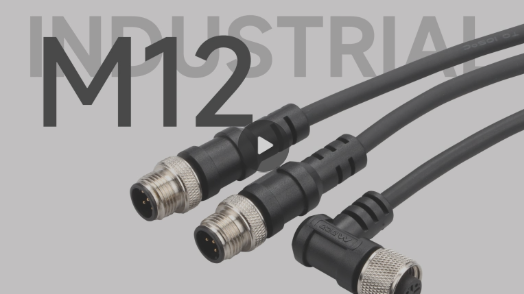
The most obvious difference is the size, but that size difference leads to a lot of other things. An M12 connector is smaller, which means it has less space for pins. You'll typically find M12s with anywhere from 3 to 17 pins. We usually see them in sensors, automation, and data applications.
M16 connectors are the bigger sibling. They can fit more pins—often up to 24. This extra space makes them a good choice for applications that need more power or more complex signal configurations. They are a common sight in machinery, robotics, and industrial control systems, where both power and numerous signals need to be sent.
The higher pin count in an M16 connector means it can handle more power and more complex data. Think about it: more wires equals more possibilities. While an M12 is ideal for a simple sensor, an M16 can drive a motor or control a series of actions simultaneously. When you are picking between them, you need to consider what signals you are sending and how much current is needed.
What About Power And Data Transfer?
When you choose a connector, you're not just picking a size; you're picking a specific function. The size difference between an M12 and an M16 affects the number of pins they can hold, and that directly impacts what they can do. This matters a great deal for how we transfer power and data.
An M12 connector is great for data. They are a go-to for industrial Ethernet and fieldbus systems. We see them everywhere in factory automation, connecting sensors, switches, and I/O blocks. Because of their smaller size, they're perfect for tight spaces and decentralized systems. Their pin configurations, like the 4-pin D-coded and 8-pin A-coded, are standard for data transfer. You'll use an M12 when you need a reliable signal, but not a huge amount of power.
M16 connectors are a bit different. They can handle a mix of power and signals. With more space, they can accommodate more conductors, which allows for higher currents. This makes them a solid choice for things like motor controls and heavy-duty machinery. Many M16s are used for applications that need both a power supply and a data signal in one single connector. For instance, you might see an M16 connector powering a robot arm while also sending control signals to it.
Don't Just Pick Based On Price
It's easy to grab the cheaper option, but that could cost you big time later. A lot of people think, "An M12 is smaller, so it's probably cheaper and I'll just use that." But if you need to run a high-power device, that choice could lead to overheating, signal loss, or even complete system failure. The cost of a failed connection in a production environment is far more than the few extra bucks you saved on a connector.
Here's what you need to consider before you make a choice:
● Current and Voltage Requirements: What are the power needs of your device? An M16 can typically handle more.
● Pin Configuration: How many signals do you need to send? If you need a lot, the M16 is the clear winner.
● Environmental Needs: Both are great for harsh places, but the sealed connections must match the thread size perfectly.
● Future Proofing: Will you need to add more functions to your device later? The M16 offers more flexibility.
How To Choose The Right Connector
Choosing the right connector isn’t a one-size-fits-all situation. We know you need to make a smart decision, so let’s walk through the exact steps you should take. Our goal is to help you avoid common mistakes and make a choice that will work for your system today and in the future.
First, you need to look at what you're trying to connect. Is it a simple sensor that only sends a low-voltage signal? An M12 is probably perfect. Are you powering a motor that needs a higher current and has multiple control wires? An M16 is the better choice. We always recommend creating a simple checklist of your needs before you buy.
● Pin Count: How many wires do you need to connect? Count them. If it’s more than 8, you should probably start looking at M16s.
● Current Rating: What’s the maximum current the device will draw? M16 connectors are built for higher currents. Check the connector's technical data sheet to make sure it can handle the load.
● Environmental Sealing: Both M12 and M16 connectors offer great protection against dust and water. Look for an IP rating like IP67 or IP68. This rating tells you how well the connector is sealed.
● Cable Type: Does your system use a shielded or unshielded cable? Make sure the connector you choose is compatible.
M12 Vs. M16: Real-World Examples
To give you a better idea of how this plays out, let's look at some real applications. This helps to show you why one connector is a better fit than the other in certain situations.
M12 in Action:
● Factory Automation: In a modern factory, M12 connectors are used everywhere to link up sensors, actuators, and switches. Their compact size and reliable data transfer are perfect for a complex network of devices.
● Food and Beverage: M12s with a stainless steel body are great for this industry. They can withstand constant washdowns and are resistant to corrosion.
● Agriculture: We see them in smart farming equipment, connecting GPS receivers and other precision tools.
M16 in Action:
● Robotics: A robot arm needs both power and a lot of different signals to move and operate. An M16 connector can handle all of that in one spot, simplifying the design and making it more reliable.
● Medical Equipment: Some medical devices require multiple power lines and data feeds, making the M16 a top choice for its higher pin count and power capacity.
● Heavy Machinery: In construction or mining equipment, you need a connector that can withstand vibrations and deliver high current. The M16 is built for this kind of work.
How To Install And Maintain M12 And M16 Connectors
Proper installation is just as important as choosing the right connector. A bad installation can ruin even the best components. You can't just screw it in and walk away. There are a few key steps to follow to make sure you get a reliable, long-lasting connection.
First, you need to prepare the cable. Strip the outer jacket and the individual wire insulation to the lengths specified by the connector manufacturer. This is a crucial step; if the insulation is too long or too short, you won't get a good crimp or solder joint. Next, you’ll terminate the wires to the pins. You can use a crimping tool for crimp-style pins or a soldering iron for solder-cup pins. Make sure each wire is secure and in the correct position.
Once the wires are attached, insert the pins into the connector body. They should snap into place. Finally, assemble the backshell and tighten the cable gland. The cable gland's job is to create a seal around the cable, preventing moisture and dust from getting inside. We recommend using a torque wrench to tighten the gland to the manufacturer's specified torque. Overtightening can damage the seal, while undertightening can let in contaminants.
Common Issues And Solutions
Even with the best products and installation, problems can happen. We see a few issues pop up again and again with custom industrial connectors. Knowing what they are and how to fix them can save you a lot of trouble.
● Loose Connections: A loose connection can cause intermittent signals or power loss. This is often because the connector wasn't tightened enough, or the wires weren't properly crimped. Solution: Re-tighten the connector and check the pins to make sure they're secure.
● Contamination: If moisture or dust gets into the connector, it can cause corrosion and short circuits. This happens when the IP rating is insufficient for the environment or the seal is broken. Solution: Clean the connector with a recommended cleaner and replace any damaged parts like O-rings or seals.
● Damaged Pins: Bent or broken pins are a common problem, especially during installation or maintenance. This can be caused by improper mating of the connector. Solution: Carefully use a pin extraction tool to replace the damaged pin. Always be gentle when mating connectors to avoid bending pins.
Conclusion
When it comes to M12 and M16 connectors, it’s not about which one is better, but which one is right for your project. We've shown you that the "M" is a metric measurement, and the numbers 12 and 16 tell you about the size of the thread. This small difference has a big impact on everything from pin count to power capacity. An M12 is typically for data and low-power needs, while an M16 can handle more power and signals.
We hope this article helps you make a confident choice for your next project. By considering your specific needs for power, pin count, and environment, you can pick a connector that works perfectly. If you have any more questions or need help finding the right product, feel free to check out our selection at MOCO Connectors.

Shenzhen MOCO Interconnect Co., Ltd.
Become a world-class industrial connector supplier & manufacturer in China, MOCO Connectors providing reliable and convenient connector solutions for global customers
PRODUCTS
QUICK LINKS
If you have any question, please contact MOCO connectors.
TEL: +86 -134 1096 6347
WhatsApp: 86-13686431391
EMAIL: eric@mocosz.com
2/F 1st Block,XinHao Industrial Park,N.O 21 XinWei Rd,XinZhuang Community,MaTian, GuangMing District,Shenzhen,P.R.C